
Your Week’s Volatility Market Commentary — Information Is Your Edge
S&P Soars On Benign Inflation Data and Strong Bank Earnings
Jump Directly To:
Equity Index |Investor Optimism |NDX | TLT | GLD | IBIT | Commentary
Equity Index Volatility
Weekly Takeaway:
-
The S&P 500 gained 2.91% for the week thanks to benign inflation data and strong bank earnings led by JP Morgan Chase (JPM)
-
VolDex (ticker VOLI) fell 18.56% on the week to close at 13.00 which is just the 18th percentile of its 52-week range
-
Stocks were helped by the 10-year yield which made a new 52-week high of 4.809% on Tuesday but fell during the rest of the week, finishing down 16.7 basis points for the week
TailDex (ticker TDEX) fell by 19.89% for the week and closed at 10.58. TDEX’s close on Friday is at just the 11th percentile of its 52-week range
-
The S&P rallied strongly on Tuesday’s PPI data but, in a worrisome turn, gave back those gains, was down more than 0.50% at one point, and was up just 0.11% at the close
-
VolDex on treasury bonds fell by just 3.41% for the week as the decline in rates on Wednesday and Thursday was tempered by an acknowledgment that rates are still high
-
CallDex on the S&P rose by 6.34% to close at 19.65 as traders were once again reaching for upside exposure. This is the 61st percentile of its 52-week range
-
VolDex on the individual names we cover was generally lower but VolDex on TSLA rose by 6.82% and on AAPL by 0.34%
-
The Investor Optimism Index rose 127.18% to a reading of 49.60
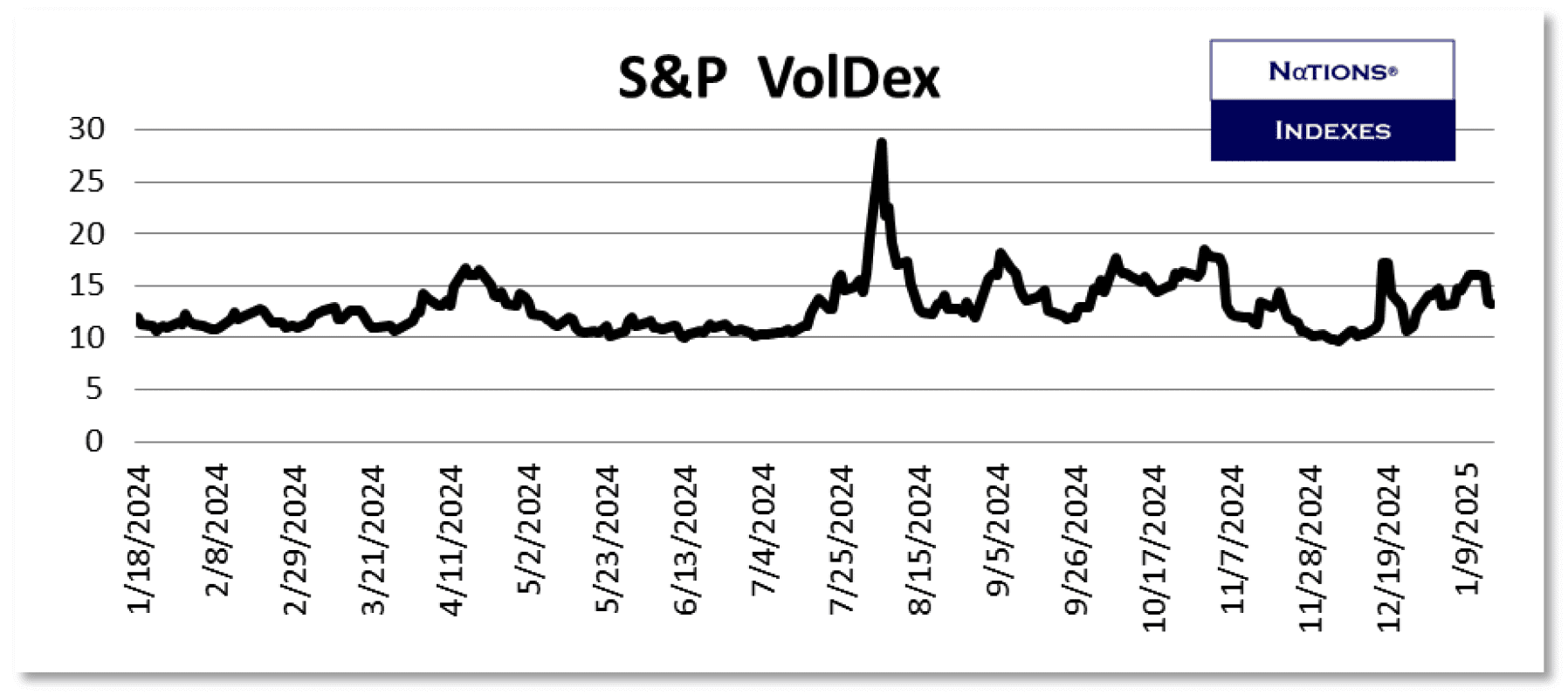
Figure 1
Equity Index Volatility:
Tuesday’s price action in the S&P 500 followed the release of PPI data and was worrisome as the market opened higher then gave back all its gains, traded down more than 0.50% on the day at one point, and rallied back to close with a small gain. SPY option flows were odd, even at the low of the day, with puts (i.e., strike prices below at-the-money) be-ing sold and calls being bought.
Tuesday’s positioning paid off on Wednesday when the year-over-year CPI data came in as ex-pected at +2.9% and solid bank earnings were reported. XLF, the financial sector ETF was the best performing sector ETF on the day with a gain of 2.55%. The S&P gained 1.83% and the 10-year yield fell by 13.5 basis points at the close.
However, Wednesday’s breadth was disappointing with 134 losers among the S&P 500 (27% of the constituents) and there were 11 new 52-week lows.
Thursday was unremarkable although the 10-year yield fell another 4.7 basis points but the mar-ket moved higher again on Friday, gaining 1.00%.
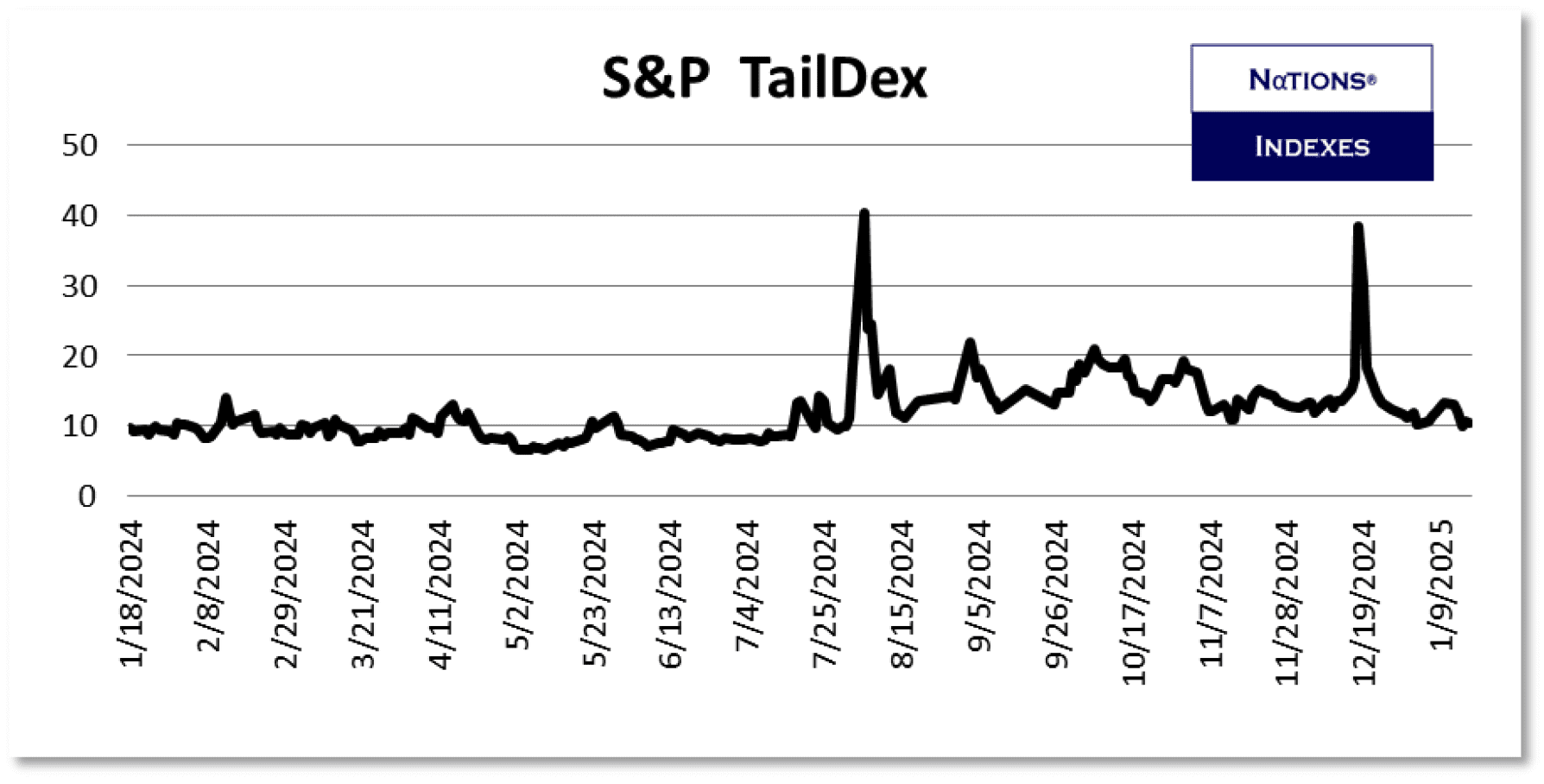
Figure 2
Every SPY-based volatility measure other than 30-day CallDex fell on the week as we have mentioned. All the other 30-day measures fell by 18.19% (PutDex) to 21.97% (RiskDex) as the catalysts (PPI, CPI, and the start of earnings season) passed with data that was as expected (inflation) or better than expected (bank earnings). The 7-day measures fell even more, with 7-day VolDex falling by 26.67%. We consider this to be a consequence of the passing of catalysts, lower interest rates, and the looming 3-day weekend. You can see the 52-week chart for TailDex above. We are watching the 10.00 level intently.
Tech names have been the big winners of the past 52 weeks and implied volatility on the Nasdaq-100 index was generally lower, mimicking that of the S&P 500, but it fell less than implied volatility in the S&P. Nasdaq-100 VolDex fell by 17.00% for the week and Nasdaq-100 TailDex fell by just 7.91%.
Regardless, implied volatility and option prices for the major equity indexes are in “risk on” mode.
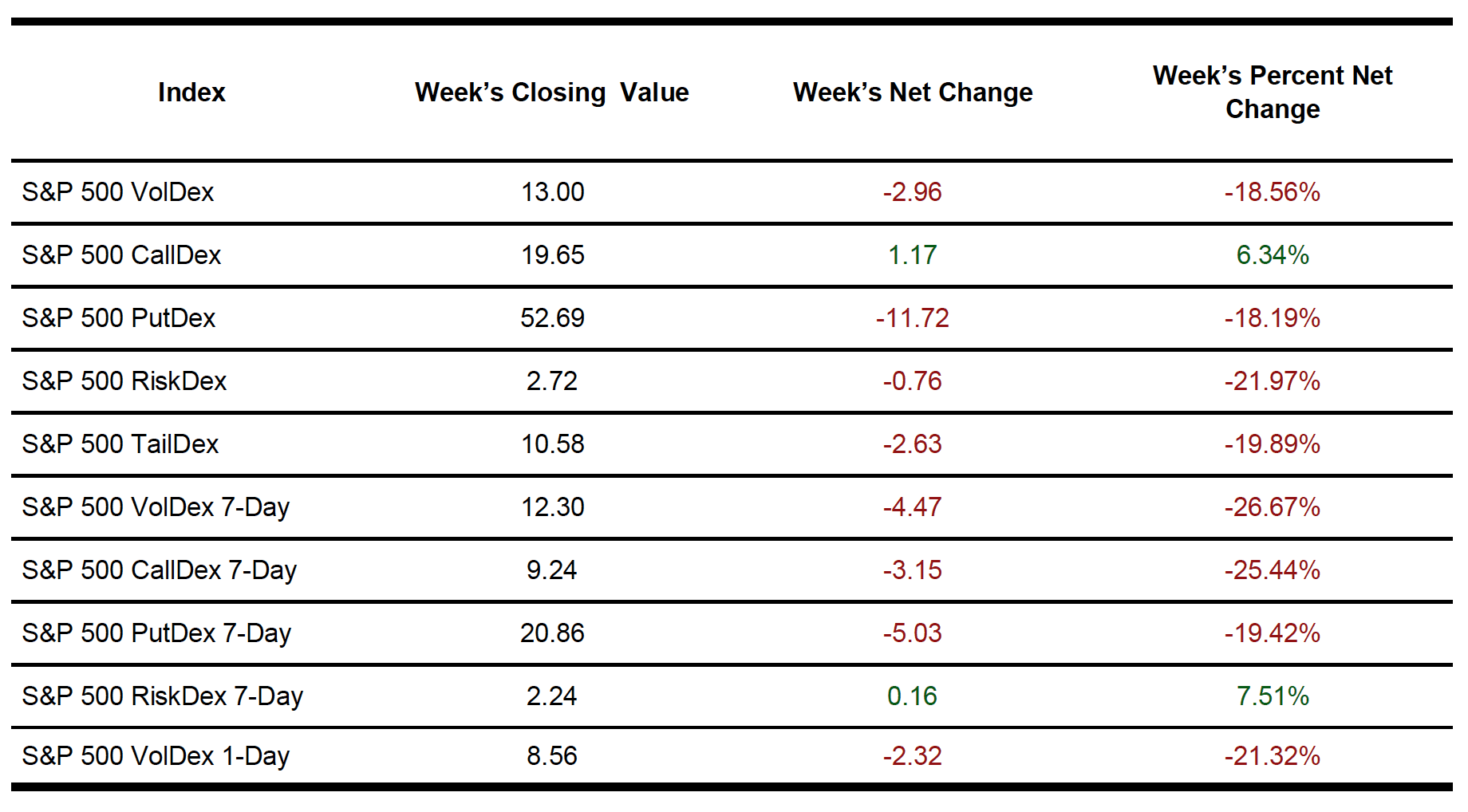
Table 1
Why It Matters… Option prices are relatively low and equity prices are high. Option prices can certainly get cheaper and equity prices can certainly go higher but traders should be aware of the relationship as VolDex is at the 18th percentile of its 52-week range while TailDex is at the 11th percentile of its range. In comparison, CallDex is at the 61st percentile of its 52-week range. Investors should be aware that option market participants are bullish.
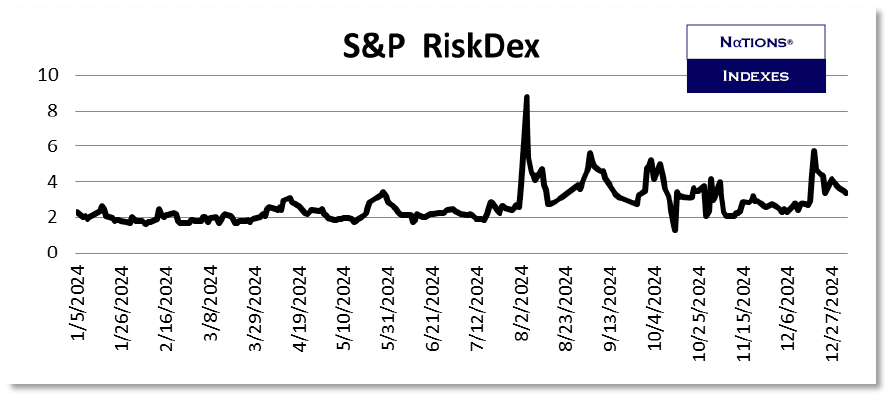
Figure 3
Nations Investor Optimism Index
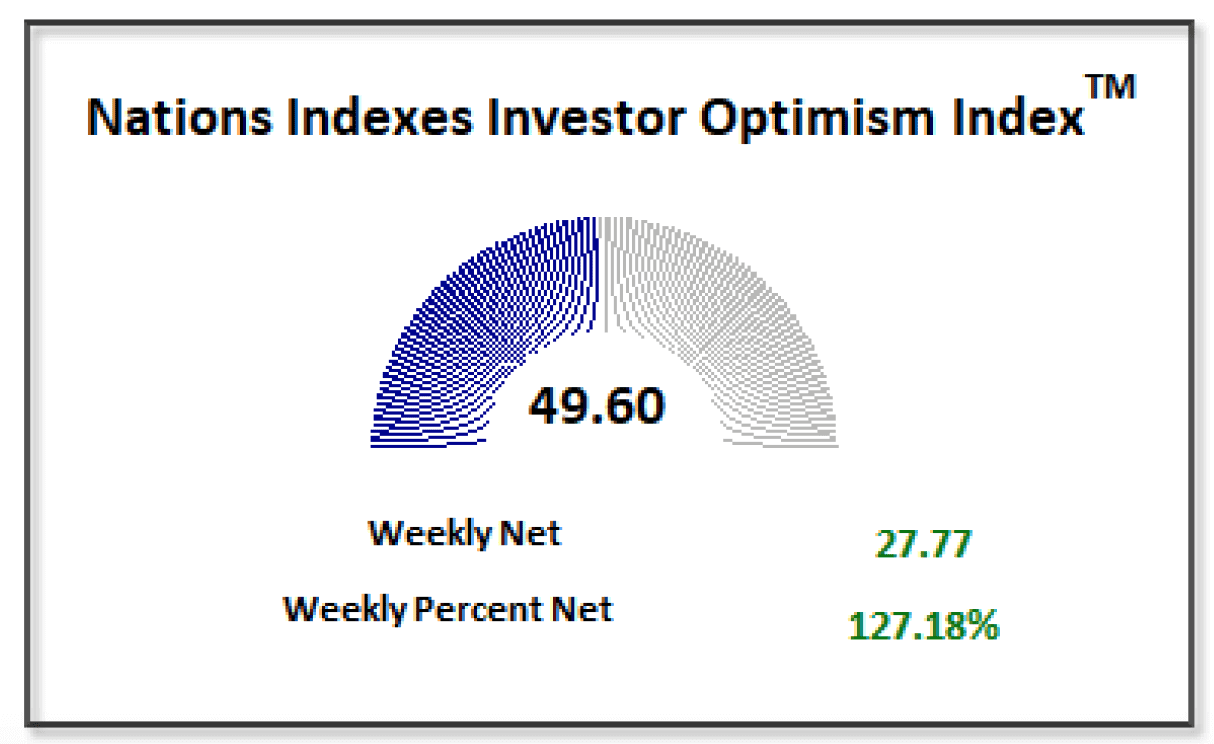
Figure 4
Investor optimism rose by 127.18% to close at a middle-ground val-ue of 49.60 which is a substantial improvement over last week’s horrible reading of 21.90. Any reading below 50 is pessimistic but this week’s closing value is barely so.
Why It Matters… Our Optimism Index can be used as a contrarian indicator for BOTH equity prices and option prices and it certainly was last week. One way we use the Optimism Index is to imagine it as a proxy for how traders and investors are positioned. If it is low, as it was last week, that can generally be viewed as meaning that investors are braced for bad news and have hedging positions in place (otherwise option prices would be lower and our Optimism In-dex would be higher). This likely means the market is going to resist large moves lower. On the other hand, if the Optimism Index is high, it can be viewed as meaning traders and investors see no reason to have hedges in place. Such market participants are vulnerable to downturns.
Deconstructing S&P Skew: It is important to deconstruct S&P option skew to understand what the option market is really saying. In a satisfying week, like this week, it can detail at which strike prices S&P option flows were concentrated and observers can then divine the think-ing of these market participants. It is a little like a football game where the defense knows what play the offense is going to run.
This week saw uniform selling of options below the point that is 0.5 standard deviations above at-the-money (approximately $610.10 in SPY). Above that point, the selling tapered off and buyers won the day above 1.0 standard deviations above at-the-market (approximately $621.20).
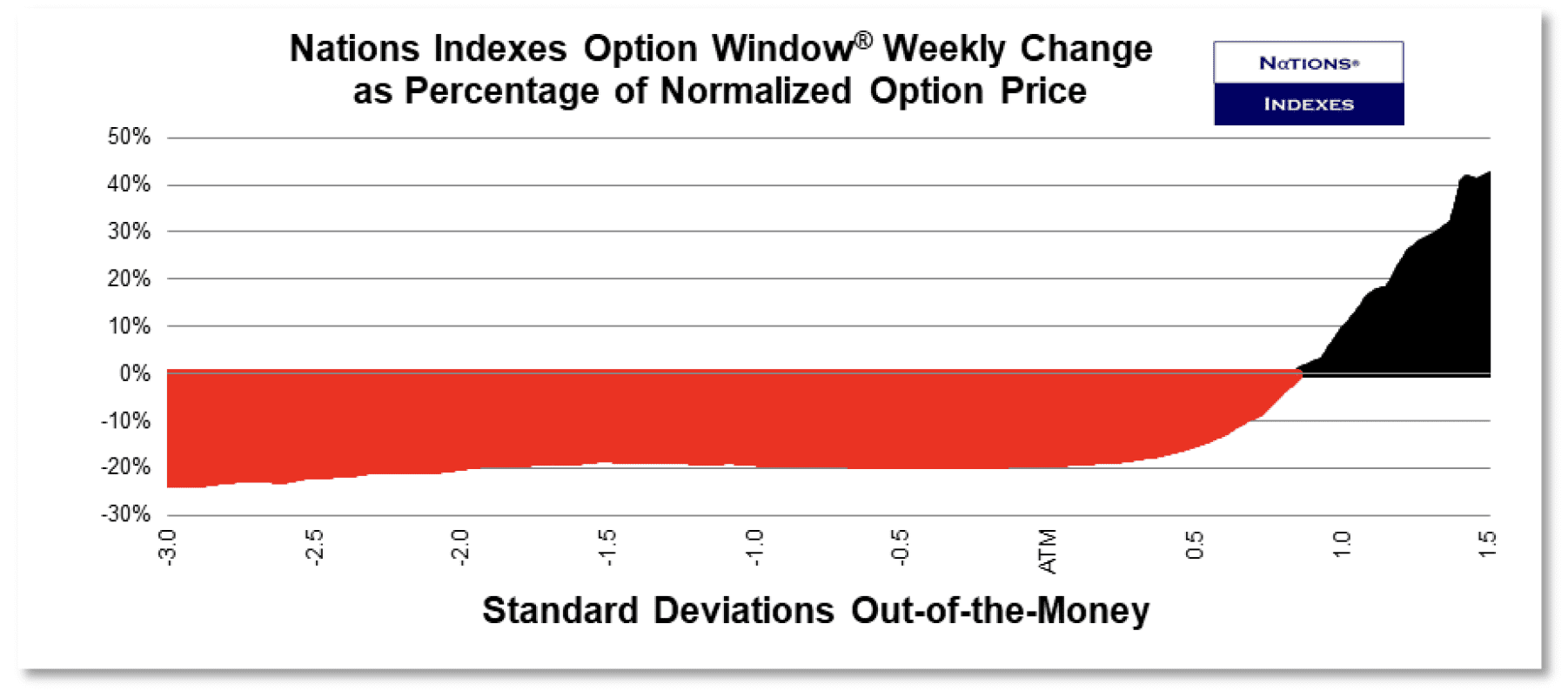
Figure 5
Other Equity Indexes
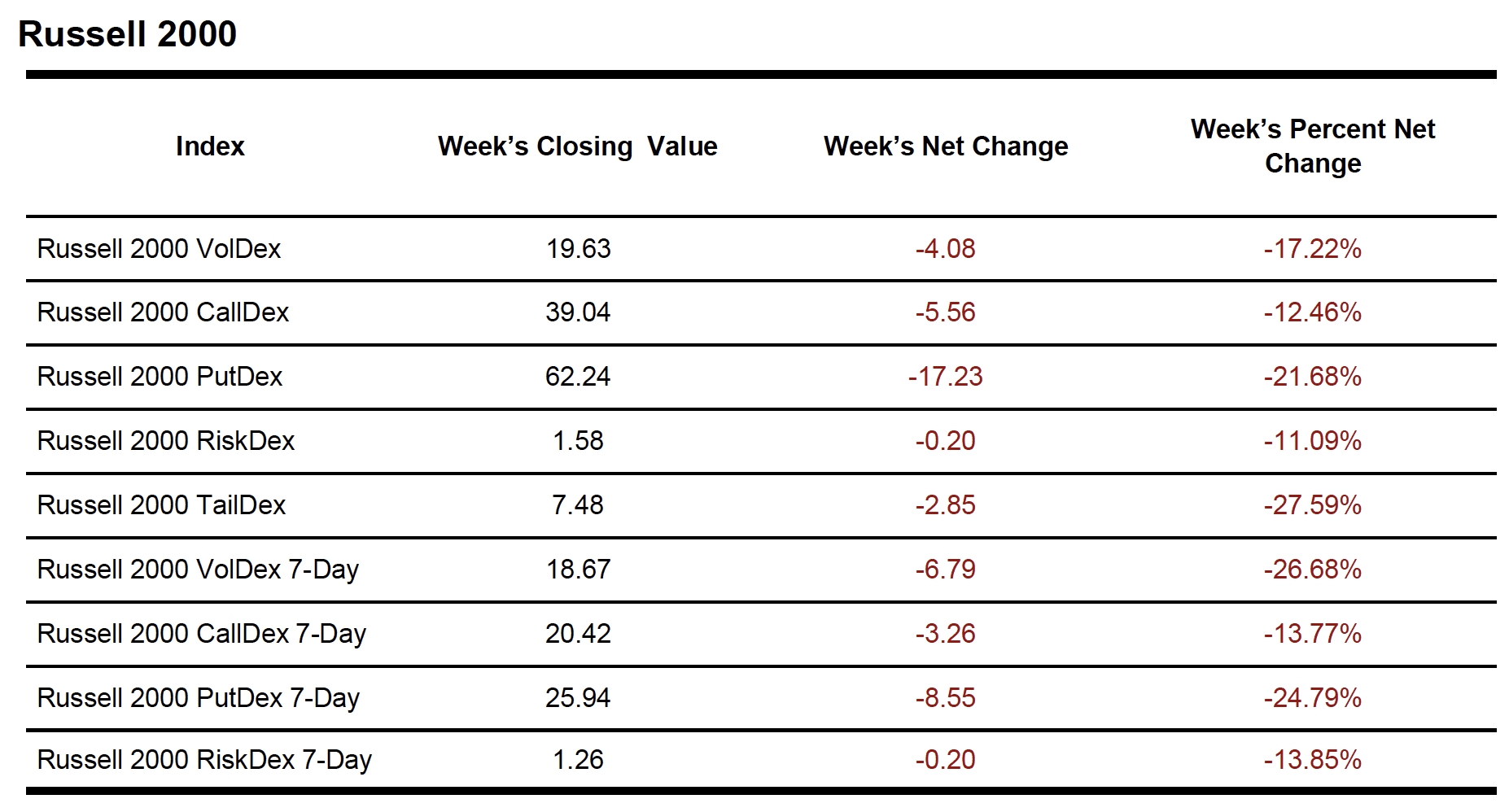
As we have discussed, Implied volatility and option prices fell for the Nasdaq-100 but by less than for the S&P 500.
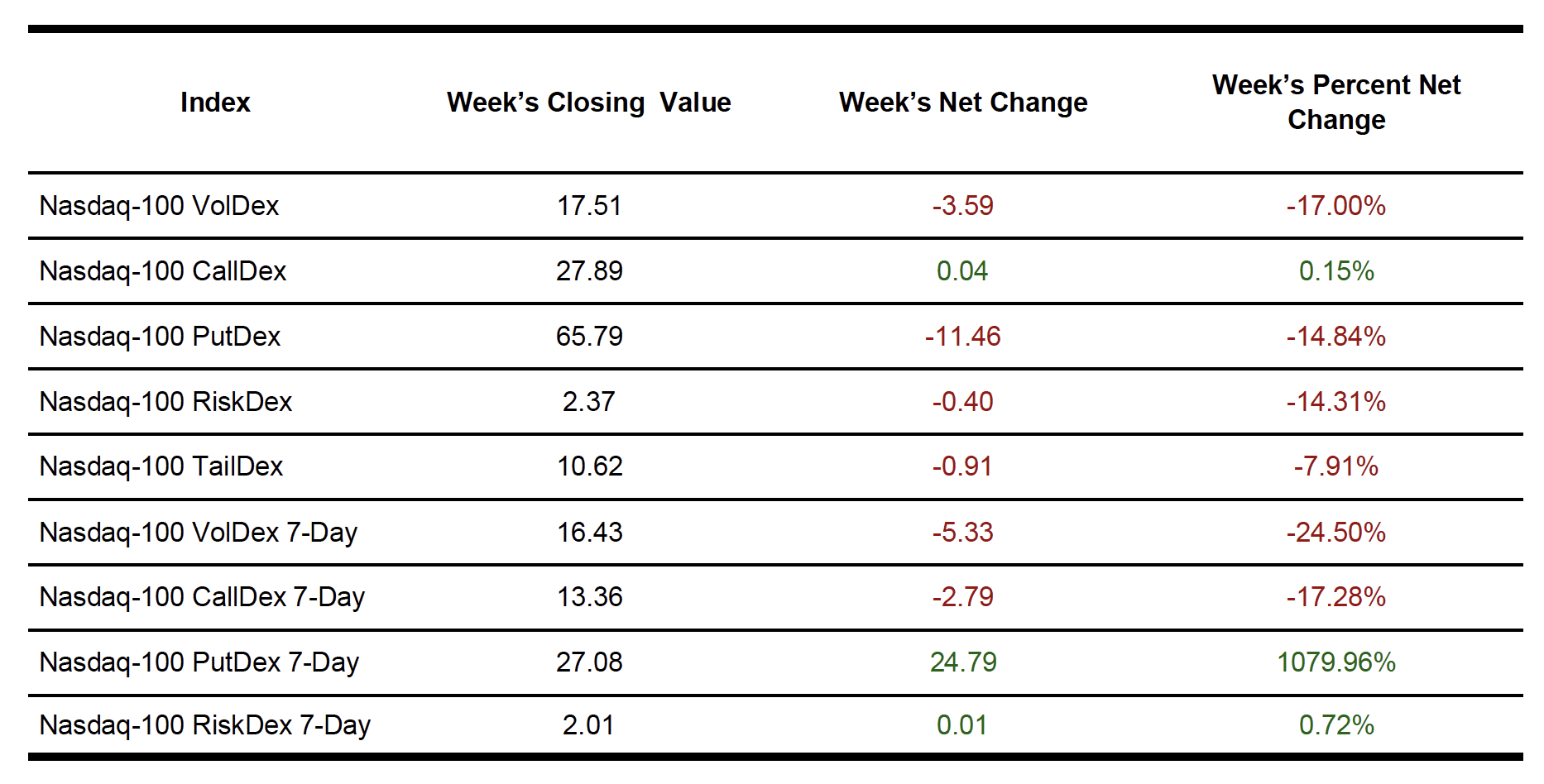
Table 2
WHY IT MATTERS…As we pointed out last week, VolDex on the Nasdaq-100 is at very low lev-els (and it got lower this week in an example of cheap options getting cheaper) and closed this week at the 17th percentile of its 52-week range. Nasdaq-100 RiskDex is at the 33rd percentile of its 52-week range.
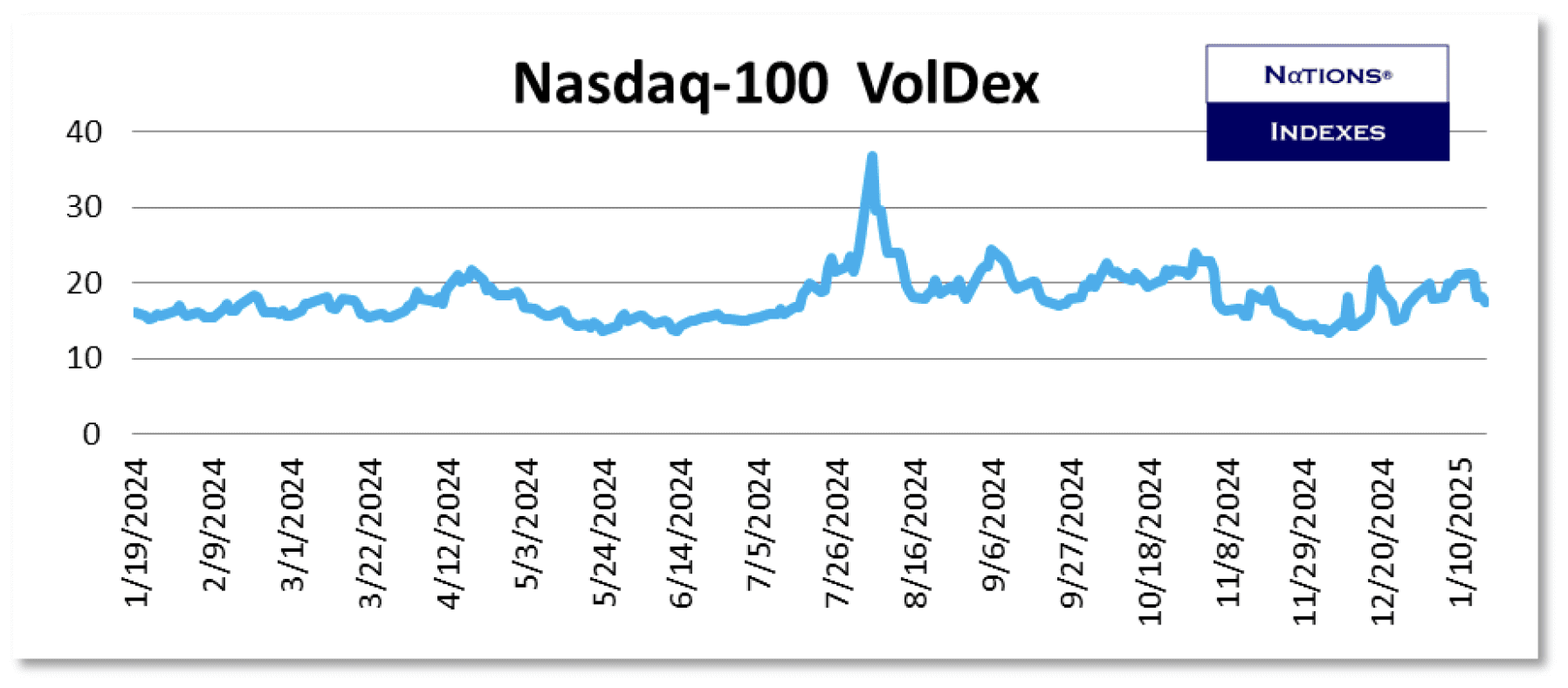
Figure 6
WHY IT MATTERS…Nasdaq-100 RiskDex represents the relative cost of establishing a collar strategy whereby an investor sells a covered call in QQQ and uses the proceeds to buy a protective put option. It also represents the opposite trade structure wherein a trader sells an out-of-the-money put option and uses the proceeds to buy an out-of-the-money call option. This second, bullish, structure is called a “risk reversal”, hence the name RiskDex.
Technology investors are generally loathe to forego potential upside by selling covered calls or using a collar and they’ve been right for a long time. But understanding that these trade struc-tures are available can be helpful to investors with big unrealized profits in the QQQ.
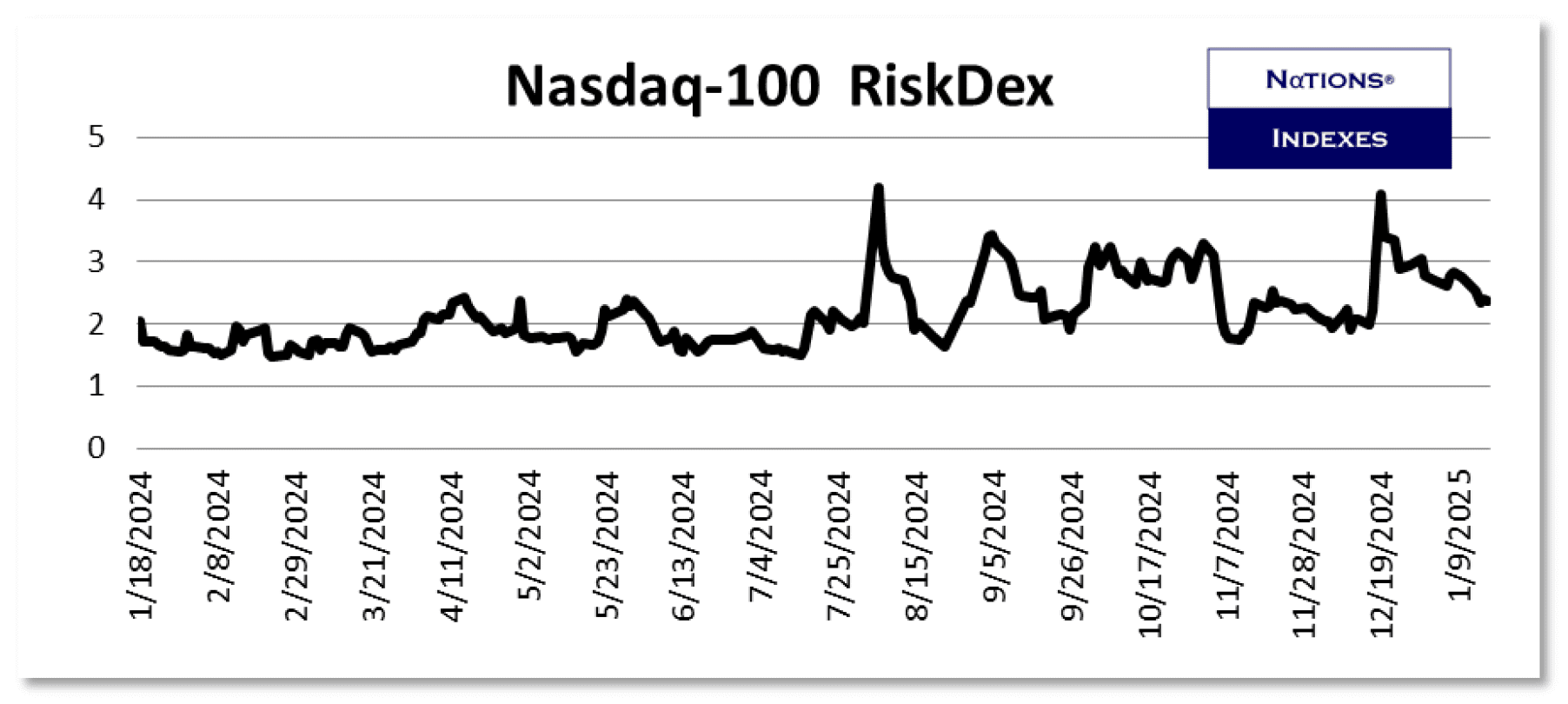
Table 3
Other Asset Volatility
Treasury Bonds
VolDex on treasury bonds
Our Dexes on treasury bonds were much more mixed this week as the 10-year yield made a new 52-week high on Monday and then turned lower late in the week.
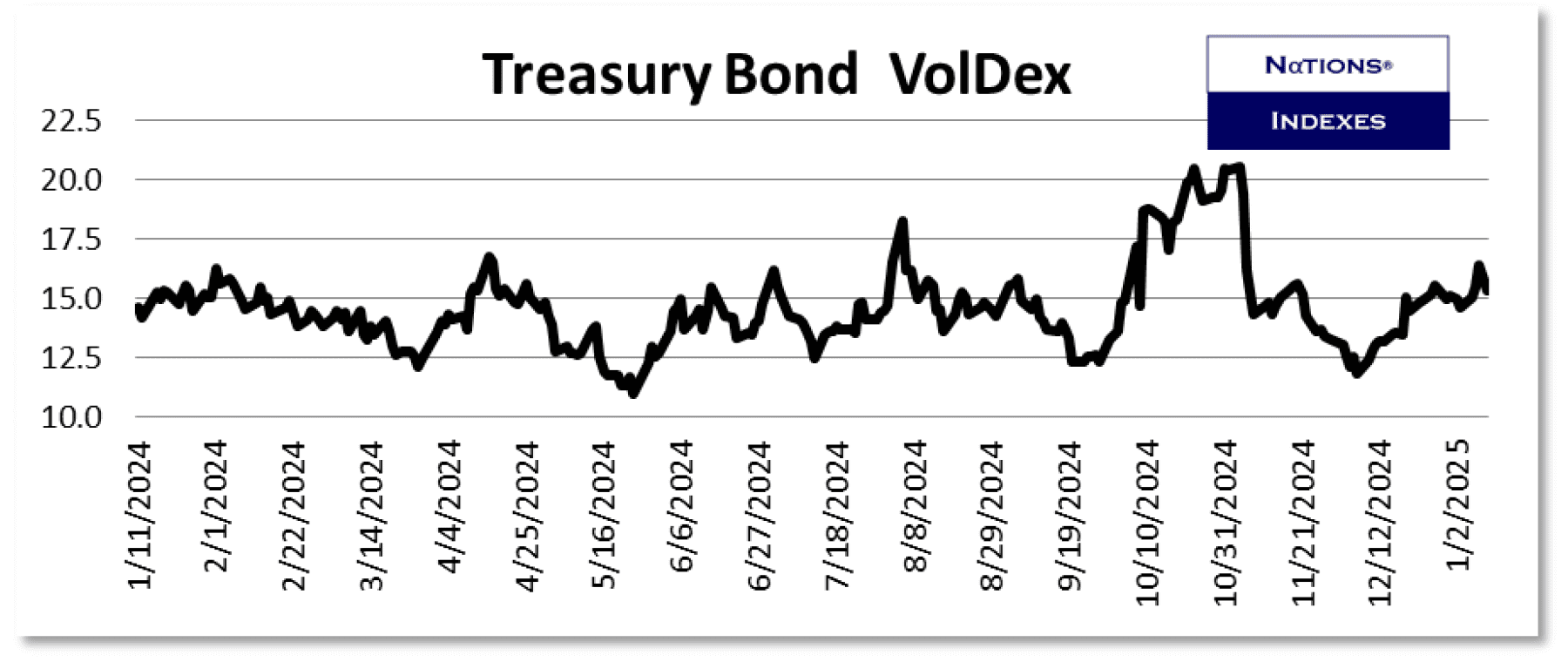
Figure 7
At Friday’s closing level of 14.81, VolDex on treasury bonds describes options that appear to be fairly priced given the amount of volatility realized this week and the prospect for future volatility as the Federal Reserve’s thinking regarding future rate cuts comes into focus.
WHY IT MATTERS… As we have been saying, treasury bond prices are likely to become more volatile and traders should remember that this week’s inflation data was “as expected” and did not show inflation falling any more than expected. There may be reason to be more optimistic than most regarding the Fed’s course of action, but it cannot be teased out of this week’s data.
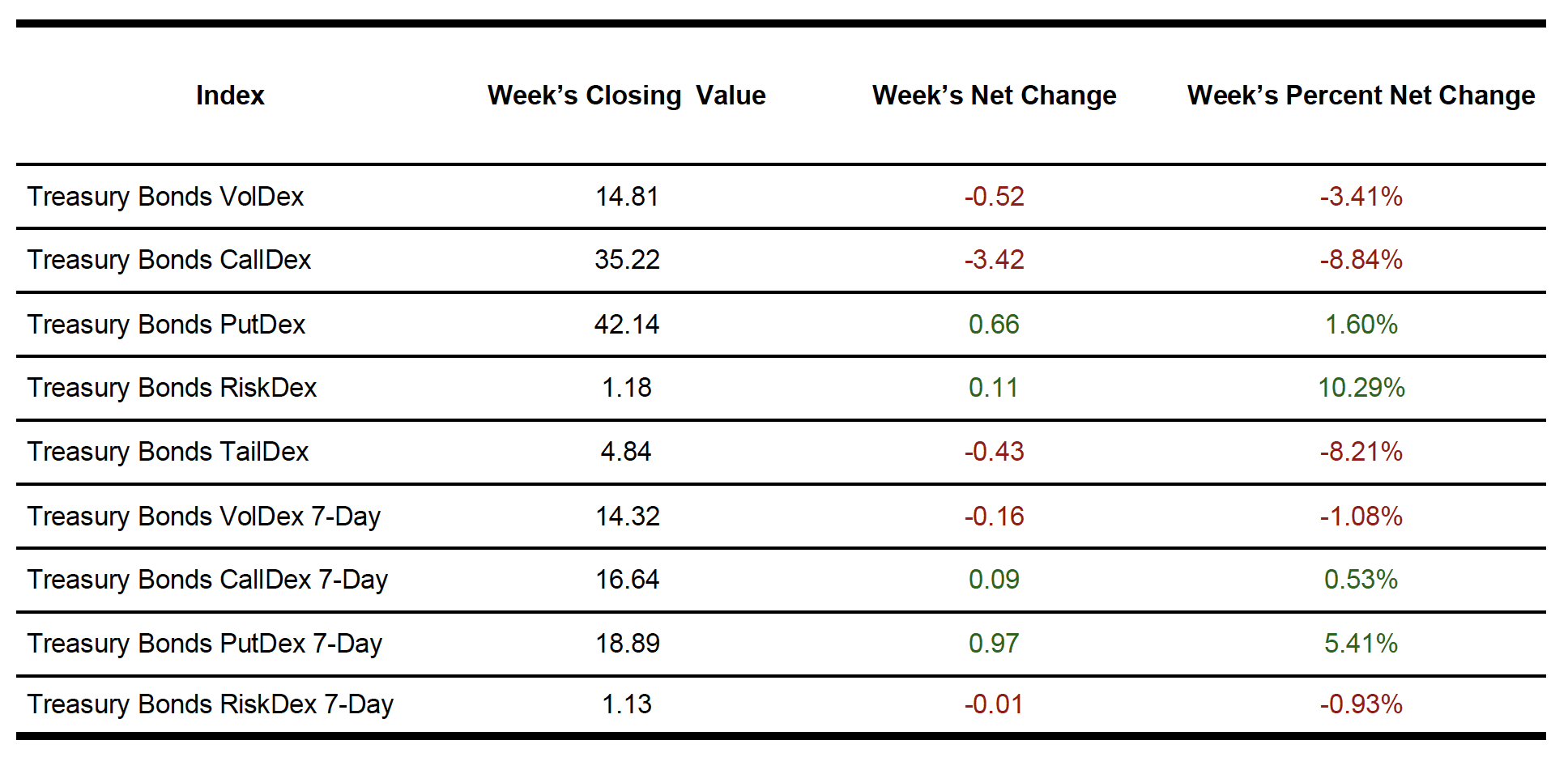
Table 4
Bitcoin
VolDex on Bitcoin
VolDex on bitcoin closed at 61.17 on Friday, an increase of 11.37% for the week. VolDex on bitcoin seemed to be falling out of its initial range which was above the 60.00 level but now has retraced to that level.

Table 5
0DTE and 1DTE Options
Zero day to expiration (ODTE) options continued to dominate the trade in SPY with 56.21% of all the SPY options traded last week being 0DTE (this percentage has remained surprisingly consistent with 56.81% of SPY options in the previous week being 0DTE options). One-Day S&P 500 VolDex closed the week at 8.56, a decline of 21.32% which was driven by the rally in equity prices and passing of the catalysts we have discussed.
Very short-dated volatility measures which use a variance swap methodology, as 1-day VIX does, inject significant error into the resulting measure because of the way out-of-the-money op-tions trade in the hours before expiration. The VolDex at-the-money methodology is particularly suited for these situations.
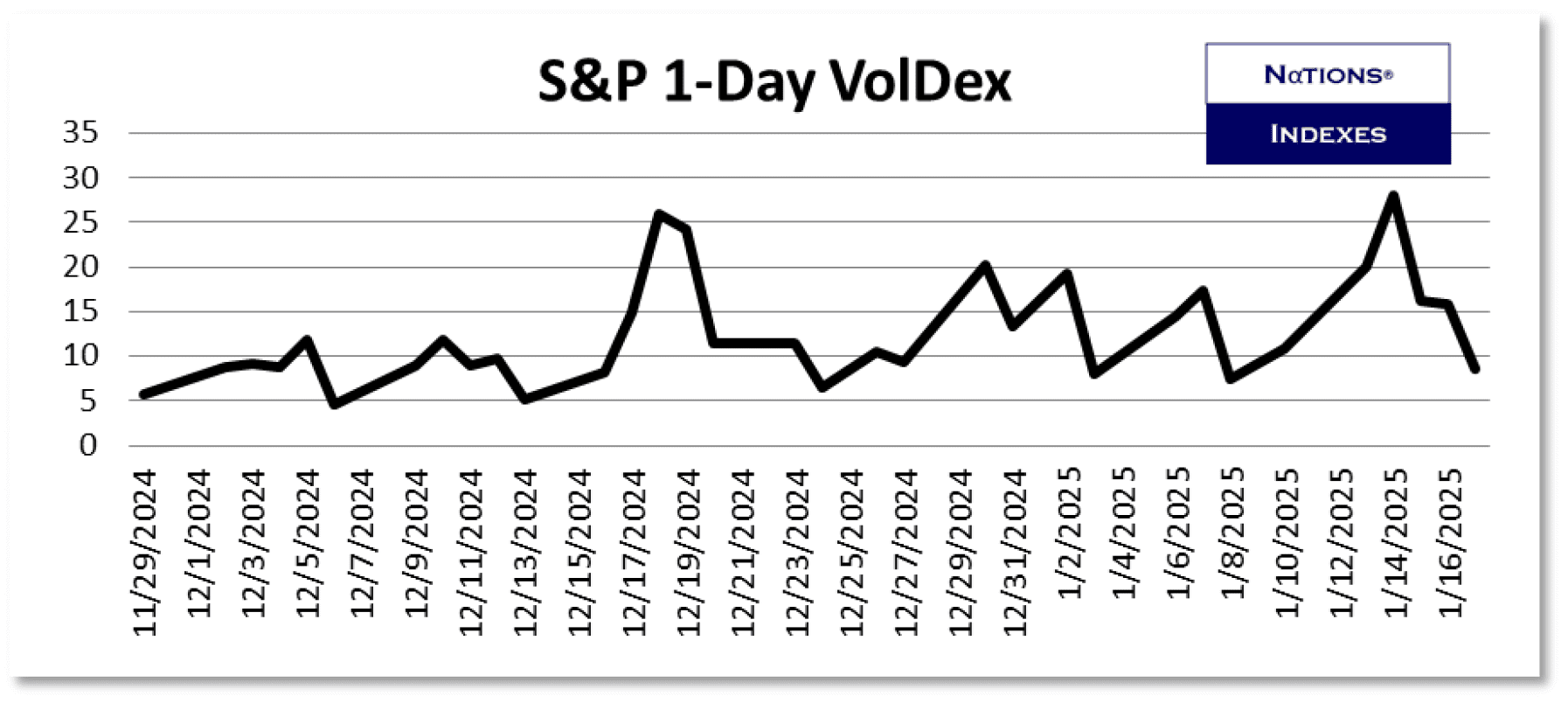
Figure 8
Equities
The Nasdaq-100 rose by 2.85% for the week, trailing gains in the S&P 500 slightly.
META fell slightly on the week, giving back some of the previous week’s gains which were driv-en by the prospect of the shuttering of TikTok. VolDex on META fell as well.
AAPL shares fell by 2.90% and VolDex on AAPL rose slightly. The big gainer on the week was TSLA which shook off its recent slump and saw VolDex jump by 6.82%. VolDex on NVDA fell by 10.82% on the week and is now below 40.00 putting it at just the 9th percentile of its 52-week range. NVDA is due to report earnings on February 19 so it is just outside the constant 30-day window VolDex uses. We will watch the Dexes on NVDA as the earnings release approaches.
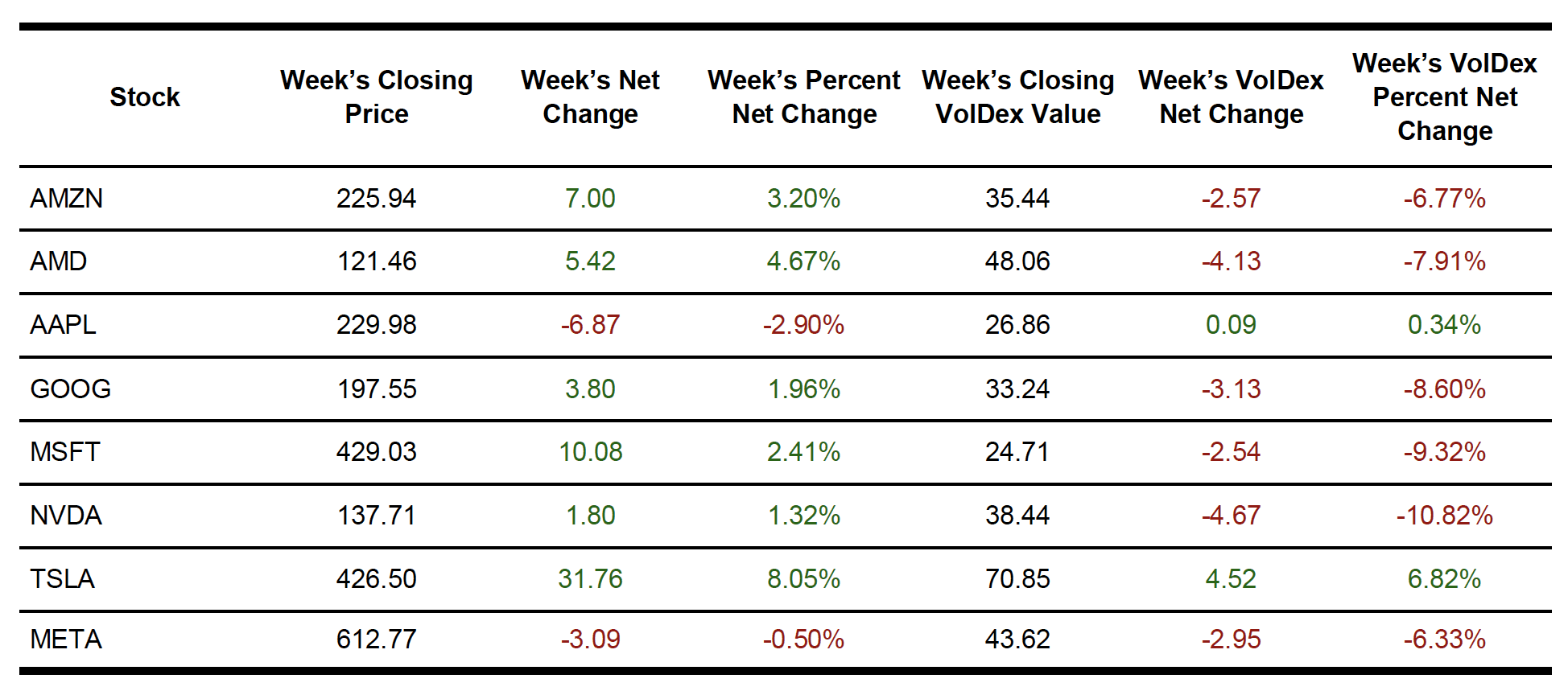
Figure 9
WHY IT MATTERS… NVDA and AMD are the bellwethers for the new AI economy and any dis-appointment in earnings, or guidance, is likely to lead to profit taking (AMD is set to report on February 4 so the 30-day Dexes catch this catalyst). None of these names go up in a straight line, anyone who lived through the deflating of the internet bubble in 2000 knows that. The goal for traders should be logical and reasonable risk taking rather than insensible buying of call op-tions and/or selling of put options.
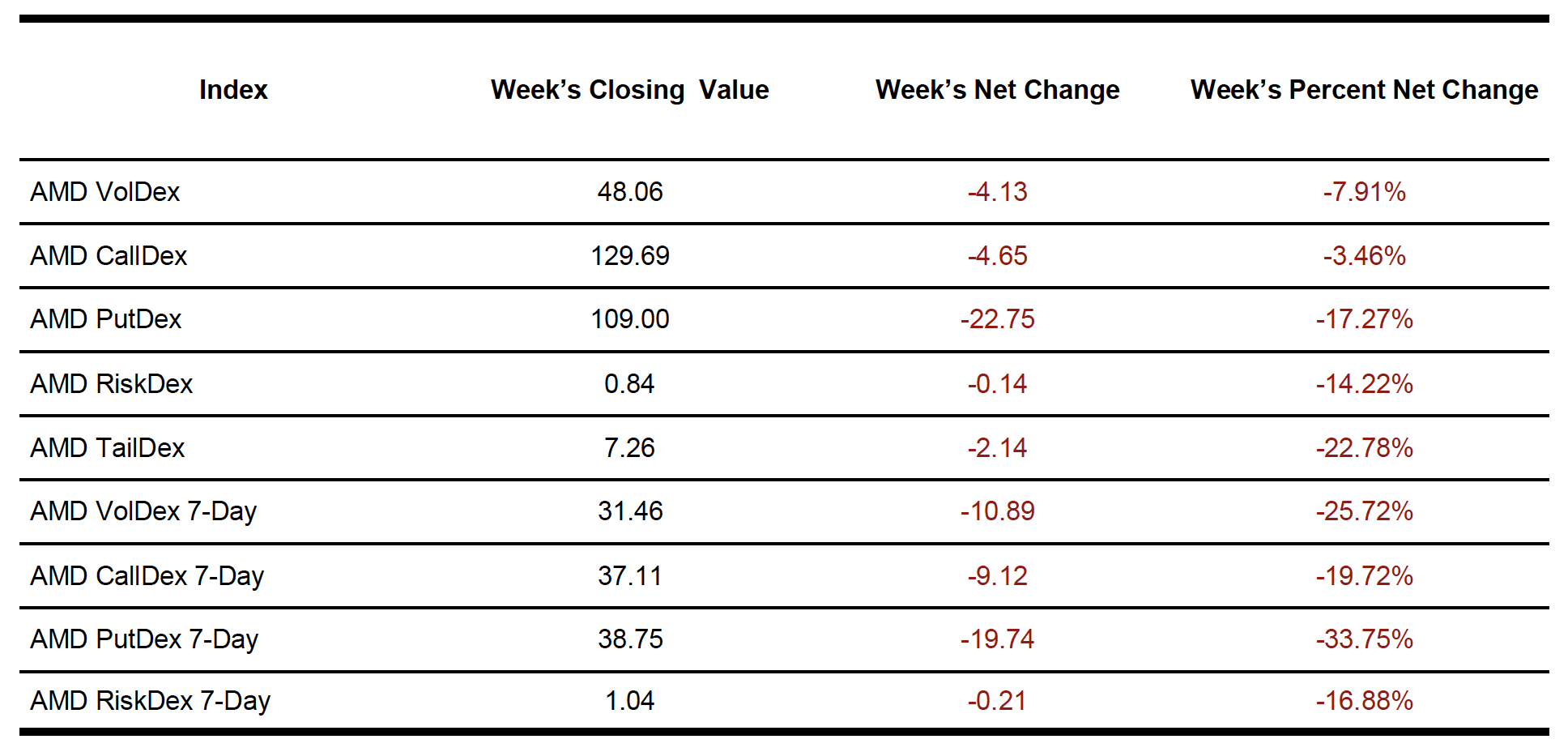
Table 6
Scott’s Weekly Commentary
Last week was very satisfying for bulls even though the tradi-tional leaders, technology names, particularly AI names, were in the middle of the pack when it comes to gainers. The fact that the Nasdaq-100 trailed the S&P 500 slightly would be good news, in that it would signal improved breadth, if it weren’t for the S&P 500 itself showing disap-pointing breadth, particularly on Wednesday.
In this vein, it is distressing that in the S&P 500, the average drawdown from the 52-week high for all constituents is 14.40%. Only 224 constituents, well less than half, are within 10% of their 52-week high and 93 are within 10% of their 52-week low. Only 373 constituents are within 20% of their 52-week high meaning more than one-quarter of all the names in the S&P 500 are in a bear market (down more than 20% from their high).
In my opinion, the better than expected bank earnings were the most important news of the week, surpassing the “as-expected” inflation news. Earnings should be an investor’s focus for the remainder of January – we too often forget that the long-term drivers of stock market returns are earnings and interest rates. It is easy to get wrapped up in ancillary and geopolitical issues, and they are certainly important to traders, but investors should know what to pay attention to and broad-based good news this earnings season is the most likely tonic for disappointing breadth.
Regarding traders, option prices on equity indexes are relatively low meaning options can be a great way to establish defined-risk option structures, bullish or bearish, over the next 30 days.
I have been paying particular attention to the yield on the 10-year treasury and since this is the second datum investors should be paying attention to, I’ll continue to watch it closely. The price action on Wednesday, when the 10-year yield fell by 13.5 basis points, and on Thursday, when it fell by another 4.7 basis points, is very good news for our stock market. The 52-week closing high of 4.803 from Monday, and the 52-week intraday high of 4.809 from Tuesday remain criti-cal levels but Friday’s close of 4.609 provides some breathing room.
Markets will be closed on Monday in observance of Martin Luther King, Jr.’s birthday.
Everyone at Nations Indexes hopes you have a great and profitable week!
Scott
